Physical Address
304 North Cardinal St.
Dorchester Center, MA 02124
Physical Address
304 North Cardinal St.
Dorchester Center, MA 02124

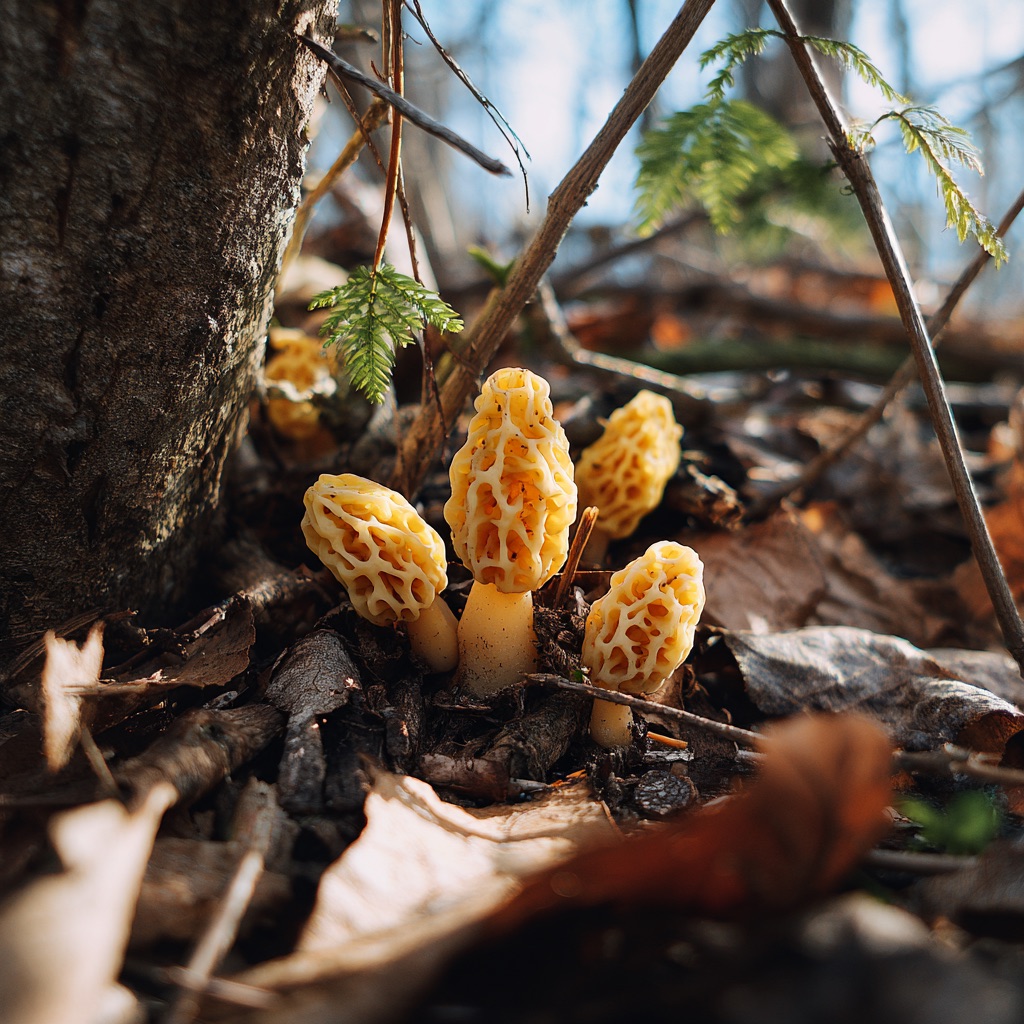
If there’s one place on earth where the forest feels like it was built for mushroom hunting, it’s the Pacific Northwest. The towering Douglas firs, the carpet of moss and duff, the constant drizzle threading through old-growth canopy — it all adds up to a fungal ecosystem unlike anything else in North America. Washington, Oregon, and northern California don’t just produce morels. They produce chanterelles the size of your fist, matsutake so fragrant you can smell them before you see them, and lobster mushrooms blazing orange against the forest floor like dropped embers.
This is not beginner’s luck territory. The Pacific Northwest rewards the hunter who takes time to learn the land, the seasons, and the species. But whether you’re chasing your first morel flush after a Cascade wildfire or working a familiar chanterelle patch you’ve kept secret for a decade, this guide will sharpen your edge for the season ahead.
Unlike the Midwest, where morel season is a focused spring sprint, the Pacific Northwest offers a mushroom hunting calendar that runs nearly year-round. Here’s how the seasons break down:
SPRING (March–June): MORELS
Spring morels in the PNW follow snowmelt up the Cascades and Coast ranges. At lower elevations in western Oregon and Washington, look for morels in April and May. At mid-elevation sites (2,000–4,000 feet), May and June are peak. The most productive spring hunting often follows the burn zones — more on that below.
SUMMER (June–August): MATSUTAKE, LOBSTER MUSHROOMS
Summer is quieter at lower elevations but productive in the mountains. Matsutake begin appearing under mountain hemlock and pine at higher elevations. Lobster mushrooms (Hypomyces lactifluorum parasitizing Russula or Lactarius hosts) start emerging in shaded, moist forest in late summer.
FALL (September–November): CHANTERELLES, HEDGEHOGS, PORCINI
Fall is the crown jewel of PNW mushroom season. Golden chanterelles erupt across the Coast Range and western slopes of the Cascades in September and October. King boletes (porcini) appear in mountain forests. Hedgehog mushrooms carpet the forest floor beneath conifers. This is when the serious commercial harvesters come out — and when you’ll find the most competition on popular trails.
WINTER (December–February): YELLOWFOOT CHANTERELLES, VELVET FOOT
Don’t put the mesh bag away. The PNW’s mild, wet winters produce yellowfoot chanterelles (Craterellus tubaeformis) and velvet foot mushrooms (Flammulina velutipes) well into January and February in coastal areas. Winter foraging in the Coast Range can be genuinely productive when much of the country is buried in snow.
If you only learn one thing from this guide, make it this: the Pacific Northwest’s most explosive morel flushes happen in the year or two following a forest fire.
Fire morels — primarily Morchella tomentosa (the gray morel) and several closely related species — fruit prolifically in burned conifer forests. The science isn’t fully understood, but the relationship is undeniable. One to two years after a significant wildfire, the burned zones can produce morels by the bucketful. Hunters who track fire perimeters and return the following spring often fill multiple bags in a single outing.
The western Cascades and eastern Oregon have seen significant wildfire activity in recent years, creating prime fire morel habitat across large stretches of forest. Here’s how to work a burn zone:
MORELS: MIXED CONIFER AND RIPARIAN ZONES
Outside of burn zones, spring morels in the PNW favor disturbed areas — roadsides, old logging cuts, streamside corridors, and areas where cottonwood, alder, and true fir mix. In eastern Washington and Oregon (the drier, ponderosa pine side of the Cascades), look for morels under ponderosa pine and in sagebrush-adjacent cottonwood drainages. Black morels (Morchella angusticeps group) tend to appear earlier and at lower elevations; gray and yellow morels follow as the season progresses upslope.
CHANTERELLES: OLD-GROWTH AND MATURE SECOND-GROWTH CONIFER
Golden chanterelles (Cantharellus formosus) in the PNW are almost exclusively found under mature Douglas fir, spruce, and hemlock. They need established mycorrhizal networks, which means young plantation forests are rarely productive. The sweet spot is mature second-growth and old-growth forest on the western slopes — the kind with a thick duff layer, sword ferns, and Oregon oxalis carpeting the ground. Chanterelles fruit from the same spots year after year; finding a good patch is an investment that pays off for decades.
MATSUTAKE: PINE FORESTS AND MOUNTAIN HEMLOCK
The elusive matsutake (Tricholoma murrillianum in the PNW) grows in a specific habitat: sandy, well-drained soil under shore pine along the coast, and under mountain hemlock and lodgepole pine at elevation. They often push up through the duff without fully surfacing, creating a distinctive raised mound or “button” that experienced hunters learn to spot. The aroma — a bold mix of cinnamon, spice, and something entirely its own — is unmistakable and often detectable before the mushroom is visible.
PORCINI / KING BOLETE: MOUNTAIN FORESTS
King boletes (Boletus edulis and related species) appear in the Cascades and Olympics under spruce, fir, and hemlock, typically at elevations between 2,500 and 5,500 feet. Fruit after the first significant fall rains following a dry summer. Look for them emerging from under the edges of logs and root mounds, often partially hidden.
MORELS (Morchella spp.)
GOLDEN CHANTERELLE (Cantharellus formosus)
MATSUTAKE (Tricholoma murrillianum)
KING BOLETE / PORCINI (Boletus edulis group)
LAYER YOUR CLOTHING
The Pacific Northwest will soak you without warning. Even a clear morning can turn wet by noon in the Coast Range. Dress in moisture-wicking layers, carry a lightweight rain shell, and wear waterproof boots. Hypothermia in wet, 50-degree forest conditions is a real risk if you’re underprepared.
WORK THE ELEVATION GRADIENT
In the PNW, elevation is your most powerful tool for extending the season. Once your low-elevation spots are past peak, move up 500–1,000 feet and you’ll often find fresh flushes just beginning. A single mountain range can give you weeks of additional hunting if you’re willing to climb.
LEARN THE LAND OWNERSHIP PATCHWORK
The PNW has a complex mix of National Forest, BLM, state forest, tribal land, and private timber company land. Rules vary significantly. Most National Forest and BLM land allows personal-use mushroom harvesting with quantity limits (typically 1–2 gallons per day per person for personal use). Some areas require free or low-cost permits. Always check current regulations for the specific ranger district or land management unit you’re entering before you go.
USE TOPO MAPS
Don’t rely solely on trails. Many of the best spots in the PNW are off-trail in dense forest. Download offline topo maps (CalTopo, Gaia GPS, or similar) before you leave cell range. Mark waypoints. The duff-covered forest floor can look identical in every direction once you’re 200 yards off the trail.
GO EARLY ON CHANTERELLES
Commercial harvesters work the PNW’s best chanterelle zones hard during fall season. On a popular trail near a known patch, the window between “fresh flush” and “already picked” can be measured in hours on a weekend morning. If you know where you’re going, arrive at first light.
The PNW is gorgeous but it demands respect. A few safety considerations specific to this region:
✅ Waterproof boots and rain shell
✅ Offline topo maps downloaded before you leave cell range
✅ Mesh collecting bags (bring two — one for each species if hunting multiple)
✅ Field guide specific to PNW species (David Arora’s “Mushrooms Demystified” or “All That the Rain Promises and More”)
✅ Current regulations for the land unit you’re entering
✅ Bear spray for remote fall hunting
✅ Charged phone with GPS and a backup compass
✅ A sharp knife for trimming and inspection in the field
✅ Someone who knows your route and return time
The Pacific Northwest doesn’t give up its mushrooms easily — but to the hunter who learns its rhythms, its burn zones, its old-growth corridors, and its vertical seasons, it gives more than almost anywhere else on the continent. Get out there. The forest is waiting.
Ready to plan your PNW mushroom season? Bookmark this guide and check back as we add location-specific tips, seasonal condition updates, and community finds from hunters across Washington, Oregon, and northern California. And if you’ve found a killer chanterelle patch or worked a fire morel zone worth talking about (minus the GPS coordinates, of course), share your story with the huntmushrooms.com community.
Explore more regional guides at huntmushrooms.com — and tag your hauls so we can all celebrate the season together.


