Physical Address
304 North Cardinal St.
Dorchester Center, MA 02124
Physical Address
304 North Cardinal St.
Dorchester Center, MA 02124

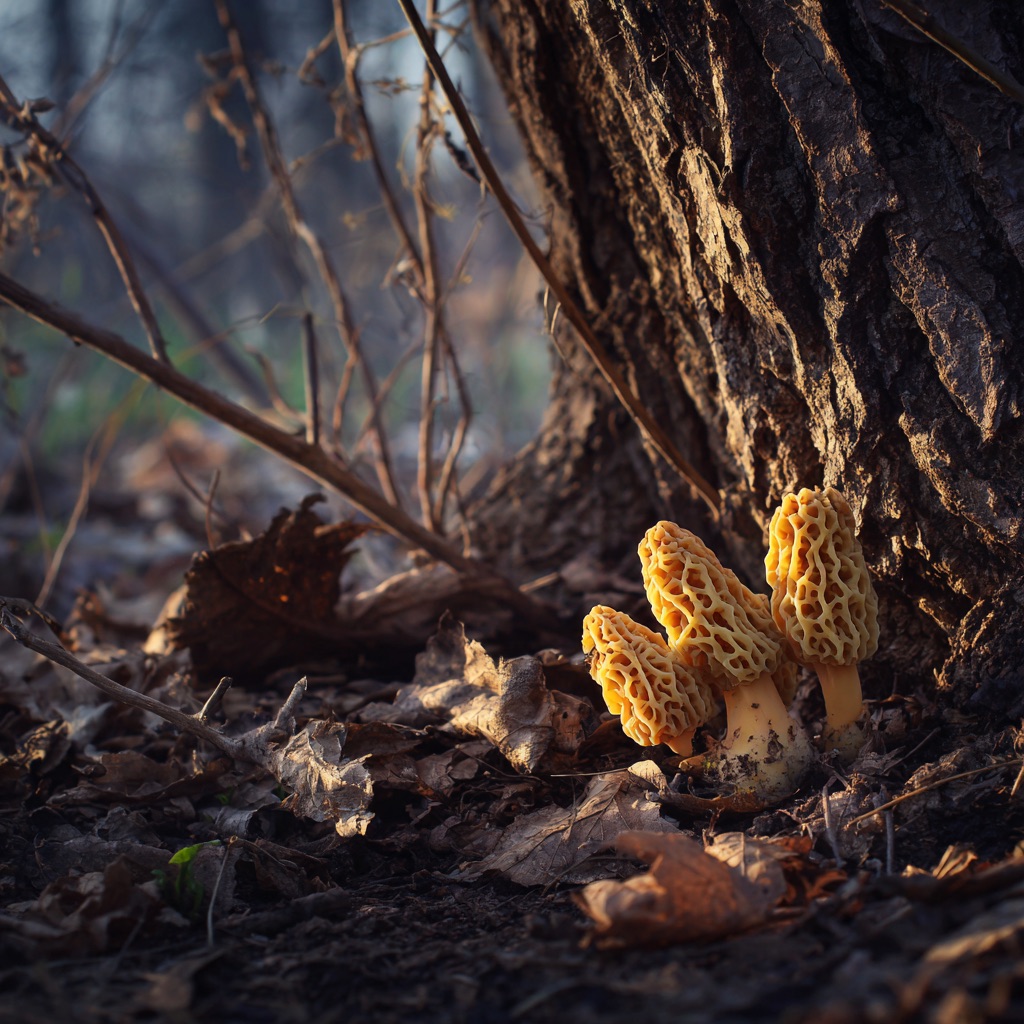
There’s a moment every Midwest forager knows — the one where you’ve been walking the same hillside for twenty minutes, seeing nothing, and then suddenly the forest floor reveals itself. A cluster of morels, honeycomb caps jutting up through last year’s leaves, looking like they’ve always been there, daring you to miss them. That moment is why people wake up before dawn, drive an hour into the country, and spend entire weekends with their eyes locked on the ground.
The Midwest is morel country. Missouri, Illinois, Indiana, Ohio, Michigan, Iowa, Kansas — these states produce some of the most prolific morel flushes in North America, and every spring, a quiet army of hunters takes to the woods to find them. Whether you’ve been hunting for thirty years or just downloaded your first mushroom ID app, this guide is built for you.
Timing is everything in morel hunting, and in the Midwest, the season is surprisingly predictable — if you know what to watch for.
The general rule: morels emerge when soil temperatures consistently hit 50–55°F at a depth of about two inches. In the southern Midwest (Missouri, southern Illinois, Kansas), that typically happens in late March through mid-April. In the central and northern zones (Indiana, Ohio, Michigan’s Lower Peninsula), expect the main flush in mid-April through early May. Michigan’s Upper Peninsula and the northern edges of Wisconsin can push into late May.
The classic trigger combination is a warm rain followed by several days of mild temperatures in the 60s. After a good soaking rain in April, you’ve usually got a 48–72 hour window before the best morels get too tall, too spongy, or too bug-eaten. Don’t wait for the weekend — the woods won’t.
A reliable local trick: watch the wild lilacs and redbud trees. When they bloom, morels are likely emerging nearby. Many veteran hunters also track forsythia blooms as an early warning signal, usually appearing a week or two before prime morel season kicks off.
Morels are habitat specialists, and learning to read the landscape is half the hunt. In the Midwest, you’ll find the highest concentrations in a few key environments:
Dying and Dead Elm Trees This is the golden ticket. Morels have a well-documented association with dying American elms, and the Midwest is full of them, still succumbing to Dutch elm disease decades later. Look for elm trees with loose, peeling bark and bare crowns. Hunt the ground within a 30-foot radius of the trunk. When you find one dead elm loaded with morels, check every similar tree in the area — they often flush in clusters across a stand.
South-Facing Hillsides (Early Season) Early in the season, south-facing slopes warm up faster and dry out quicker after rain. These spots produce the first morels of the year. Later in the season, shift your focus to north-facing slopes and valley bottoms, which stay cooler and moister longer.
River Bottoms and Creek Drainages The floodplain forests of the Mississippi, Missouri, Ohio, and their tributaries are legendary morel habitat. The combination of rich, loamy soil, abundant dead hardwoods, and consistent moisture creates ideal conditions. In Missouri and Illinois, some of the best hunting is in the bottomland timber along creek drainages that feed into larger rivers.
Old Apple Orchards Don’t overlook abandoned orchards. Morels — particularly the yellow variety — have a mysterious affinity for old apple trees. If you find an overgrown orchard on a rural property (with permission, of course), it’s worth a careful slow walk through every row.
Ash Trees With ash trees now dying en masse due to the emerald ash borer, a new wave of prime morel habitat is emerging across the Midwest. Just as with elms, dying ash trees can trigger prolific flushes. Learn to identify ash — opposite branching, compound leaves, diamond-furrowed bark — and you’ll have a mental map of potential hotspots wherever you go.
Morels are considered one of the safest wild mushrooms for beginners, largely because their look-alikes are easy to distinguish once you know what to check. That said, proper ID is non-negotiable.
True Morels (Morchella species)
The False Morel (Gyromitra species)
The main look-alike to know is the false morel, sometimes called the “brain mushroom.” Key differences:
When in doubt, slice it. Hollow = true morel. Anything else — don’t eat it.
Move Slowly The number one mistake new hunters make is moving too fast. Morels are masters of camouflage; their tan-and-brown coloring blends perfectly with leaf litter and debris. Get into a slow, scanning rhythm, looking several feet ahead and sweeping your gaze across the ground. When you spot one, stop completely and look around before moving — there are almost always more nearby.
Use a Mesh Bag Carry your morels in a mesh or net bag, not a plastic bag or sealed container. As you walk, spores fall through the mesh and potentially inoculate new spots. It’s the sustainable choice and keeps your mushrooms from getting sweaty and degrading.
Mark Your Spots — But Keep Them Secret Drop a pin in your phone when you find a productive spot. Morels are perennial; they’ll come back to the same locations year after year if the habitat is maintained. These spots are gold, and experienced hunters guard them accordingly.
Go After Rain, Not During Rain triggers flushes, but hunting in the rain is miserable and the mushrooms are harder to spot on wet, darkened ground. Wait for the rain to pass, give it 24–48 hours, and head out.
Get Permission In the Midwest, a lot of the best morel habitat is on private farmland. Many landowners will say yes if you ask respectfully — and a gift bag of fresh morels for the property owner goes a long way toward securing access next year, too.
Morel hunting is one of the safer forms of wild foraging, but a few safety principles are worth internalizing:
Before you head out this spring, make sure you’ve got the basics covered:
The Midwest gives up its morels willingly to those who show up prepared, pay attention, and respect the woods. Now get out there — the season waits for no one.


